Opens in a new tab

Success Story

Kate’s Story – supported by STEPS Rehabilitation Foundation.

At 42 years old, Kate was living an active life. In December 2021, she survived a major bleed in her brainstem and had to relearn how to sit, stand and eventually take her first steps.

At 42 years old, Kate was living an active life. She worked full-time in public health, ran regularly, enjoyed camping holidays with her family and spent her weekends at her local Parkrun, an event she had helped to set up in Rotherham.

In December 2021, Kate survived a major bleed in her brainstem. After returning home from taking her son swimming, she felt an intense pain at the back of her head and went upstairs to bed. Her husband was at home with her at the time and noticed that Kate had quickly become very unwell, unable to move, speak or breathe properly. An ambulance arrived very quickly.

Stroke at the age of 42

On arrival at hospital, Kate was placed into an induced coma, and her family were told to prepare for the worst. When she came round several days later, she was experiencing locked-in syndrome; a terrifying condition which meant she could not move or speak, but she could hear, see and understand everything happening around her.

“I had to learn everything again, from sitting to standing, showering and moving everything from my little finger down to my toes.” – Kate Green

In the very early stages post stroke, the only way Kate could communicate was by
moving her eyes. However, one day she managed an initial tiny flicker in her little
finger which was the start of her rehabilitation journey. She spent over five months in
hospital, and a further six months in a neurorehabilitation facility with limited
physiotherapy and OT sessions, but she gradually relearned how to sit, stand and
eventually take her first steps.

Returning home following a stroke

When Kate returned home, she could walk only with the support of a large frame. Everyday tasks such as showering and getting dressed still required help, and her right side remained significantly weaker.

With only limited occupational therapy and physiotherapy available to her at that stage, Kate felt she had more progress to make and wanted to keep building on what she had achieved. In 2024, she privately funded an intensive four-week programme at MOTIONrehab‘s Leeds clinic. It proved to be a turning point.

“It was a bit of a game changer. It made me realise all the things I wanted to work on more. It was quite a moment in my rehab. I thought, ‘I need to do more with this.'”

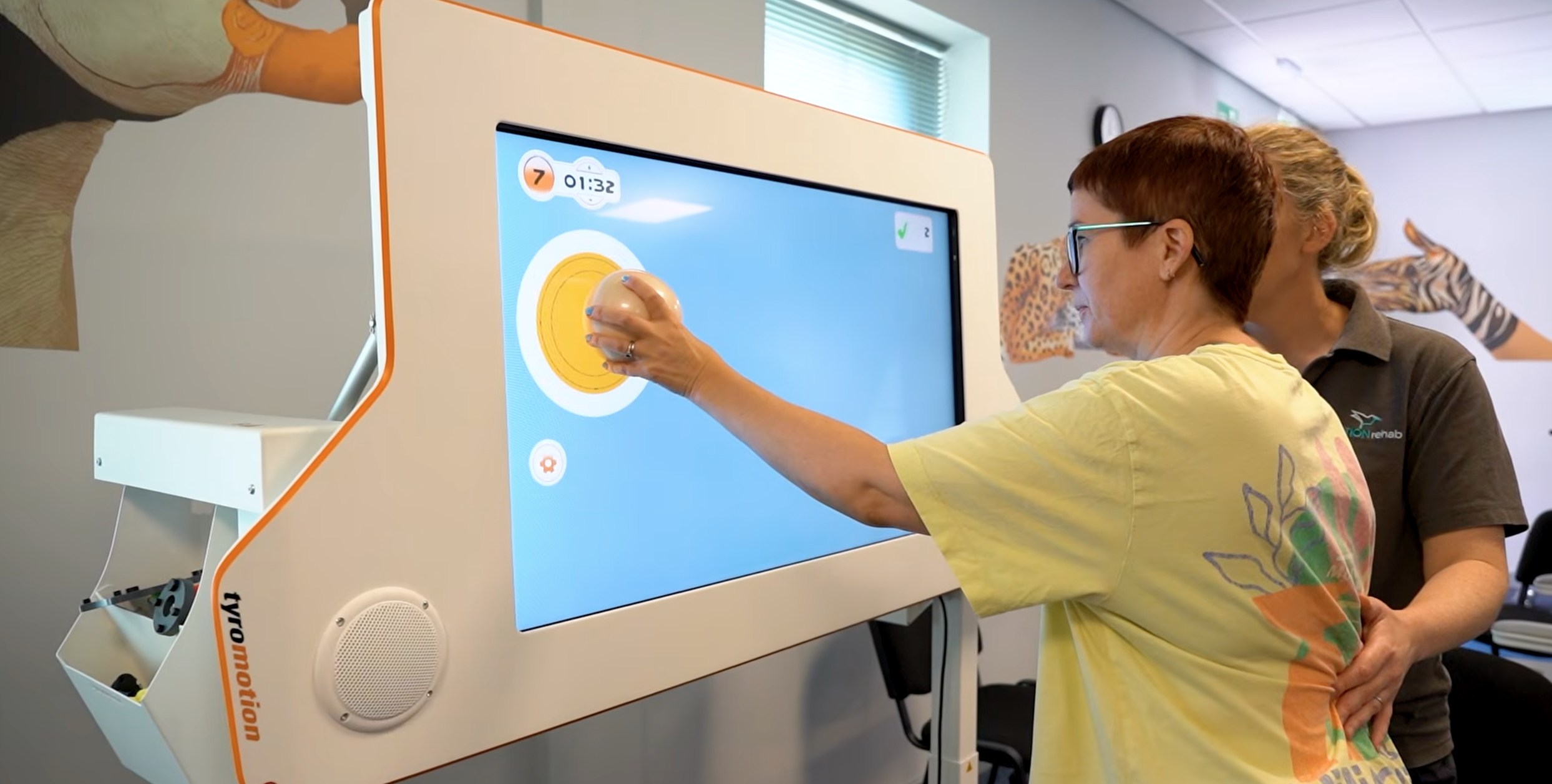
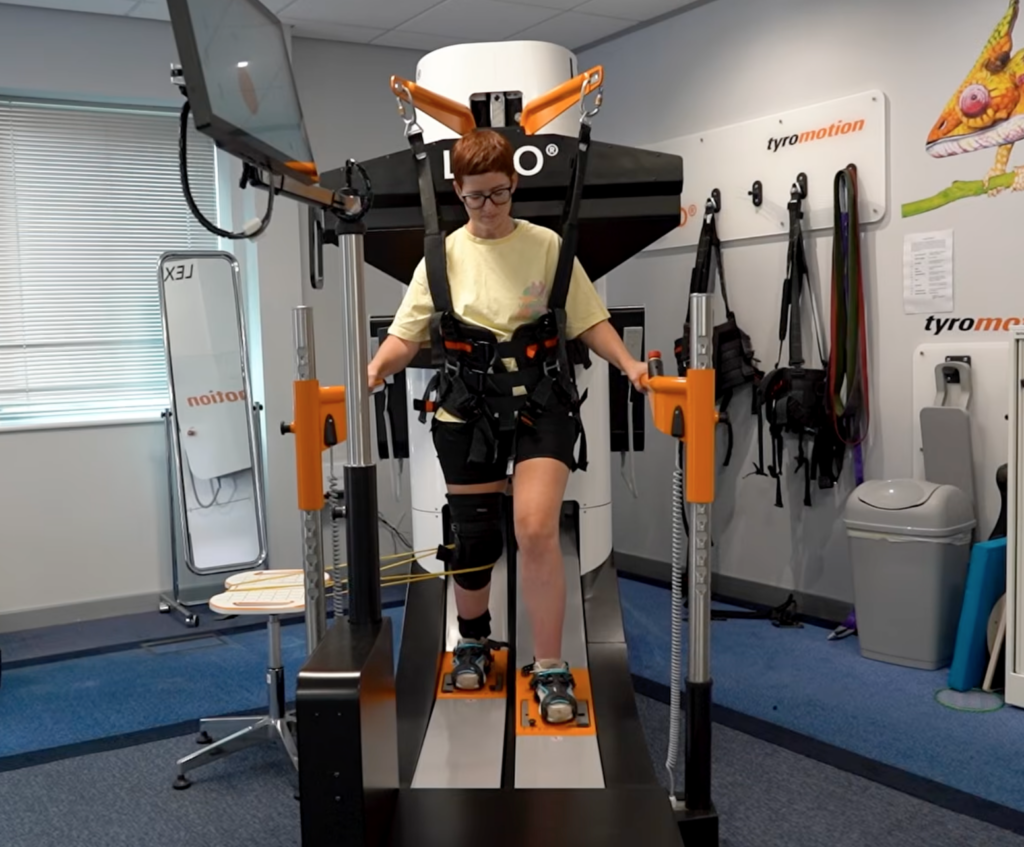
She went on to continue her rehabilitation at MOTIONrehab’s Doncaster clinic, combining traditional physiotherapy with specialist rehabilitation technology, working towards clear goals; to walk more efficiently, cover greater distances and become as independent as possible. Her favourite piece of equipment is the LEXO gait trainer, but she also uses a range of other technology to build her balance, coordination and strength. For Kate, what this technology offers above all is honest feedback.

“I can actually see where I’m putting my weight. I can see that I’m putting most of it through my left side.”

Kate knew that will the right support she could progress even more, but specialist neurorehabilitation and rehabilitation technology are difficult to access without financial support. When her programme of self-funded rehabilitation came to an end, the team at MOTIONrehab told her about the STEPS Rehabilitation Foundation.

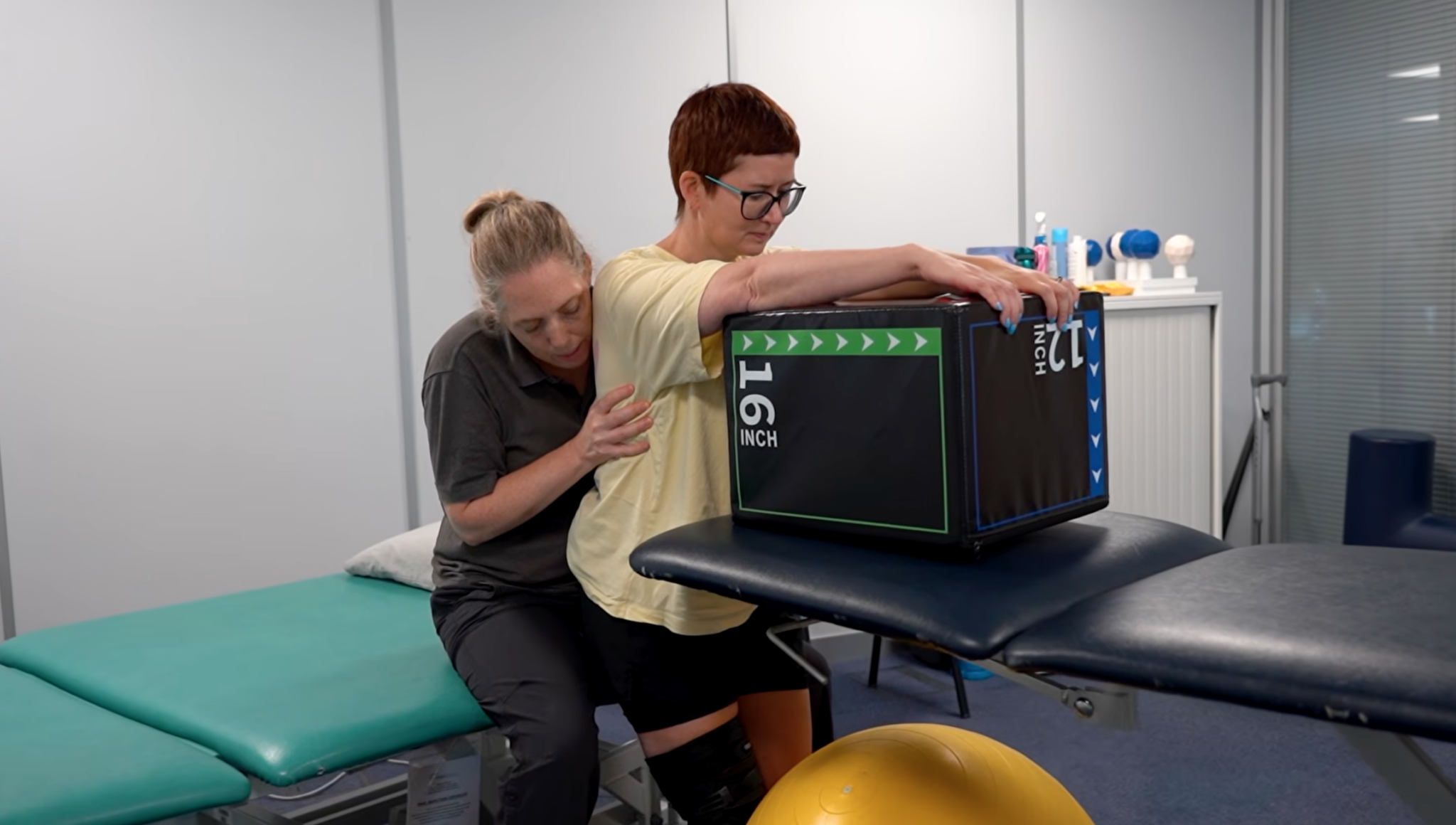
The Foundation exists to fund rehabilitation for people who would otherwise be unable to access it. With the help and support of the team at MOTIONrehab, Kate applied and was successful. The grant funded 12 further weeks of intensive, outpatient neurorehabilitation, combining hands-on therapy, exercise sessions and technology access, along with support for her transport to the clinic.

"The STEPS Rehabilitation Foundation is a brilliant resource. I've really benefited from this kind of rehabilitation, but it's difficult to fund if you're paying privately."
Progress since the grant

Today, Kate can walk independently indoors at times, walk outdoors with her frame and manage the stairs entirely on her own. She no longer needs help to shower or get dressed.

Her strength has grown too. She can now lift weights and can now manage around 40 minutes at a time on the LEXO, up from the 20 or 30 seconds she could initially stand for in the early stages of her recovery. 

Alongside the physical progress, her confidence has also grown, something she puts down to the supportive, knowledgeable environment at MOTIONrehab and to being around other people at the clinic on similar journeys.

Looking ahead

Kate’s goals now go well beyond walking. Supported by MOTIONrehab and driven by her own unwavering dedication to her rehabilitation, she wants to move more efficiently, spend more time in the office, become more independent at work, get out more with her son, and take part in a Parkrun again, an event she helped establish before her stroke and volunteered at most weekends.

“I want to function independently to the best of my ability.”

More than four years on from her stroke, Kate is still working, still challenging herself and still discovering what is possible. Her story is testament to her determination, the right specialist support, and the fact that neurological rehabilitation does not have a natural end point. While the brain changes most rapidly in the early stages after a stroke or brain injury, given the right environment, challenge, repetition and intensity, progress can continue for years to come.

Reflecting on the grant from the Foundation, Kate said,

“I would encourage anyone who is eligible to apply for a grant if they’re not able to fund this rehabilitation for themselves. It makes the world of difference.”

About MOTIONrehab

MOTIONrehab was founded in 2007 by Sarah Daniel, who was committed to delivering specialist neurorehabilitation that supports the brain’s capacity to recover. 

“When someone experiences an illness, injury or other damage to the nervous system, the brain does not repair itself in the way a broken bone does. Instead, it reorganises, forming new pathways to take over functions that have been lost, a process known as neuroplasticity. Neurorehabilitation exists to support and accelerate this process.” – Sarah Daniel

A decade later, Sarah reviewed the evidence for what neurorehabilitation should look like and visited clinics across Europe to see how rehabilitation technology was being used. Today, MOTIONrehab delivers that same technology-led approach across four clinics in Yorkshire and the Humber region, three of which house a dedicated robotic suite.

“There’s a persistent idea that people only have a two-year window to make progress after a brain injury or stroke.” says Sarah. “It’s true that the brain changes most rapidly in the first two years, but progress doesn’t stop there. Given the right environment, challenge, repetition and intensity, people can go on making meaningful gains many years after their injury or illness.”

Rehabilitation technology at MOTIONrehab

Every device at MOTIONrehab has been carefully chosen for its clinical value. As treatment programmes are bespoke to each client’s goals and progress, the equipment used can vary throughout the rehabilitation journey, whether as part of an intensive programme or on a sessional basis. For Kate, this has meant working with a combination of technologies designed to build strength, balance and independent movement.

The principle behind the equipment is simple, the more a client can repeat a functional movement, safely and in a controlled way, the better the outcome. The machines also give immediate feedback, letting clients see exactly what their body is doing in real time, just as Kate does on the LEXO.

Lee, an Advanced Technical Instructor, is one of the team working directly with Kate on this technology as part of her programme. The clinic’s technical instructors bring detailed knowledge of human movement and exercise, working alongside physiotherapists as part of a wider team that meets regularly to discuss each client’s goals and how technology can support them.

Kate’s rehabilitation programme includes:

  • LEXO – an end-effector gait trainer with robotic foot plates and dynamic body weight support that replicate a natural walking pattern, giving real-time feedback to help motivate progress towards independent walking.
  • TYMO – a balance plate that mirrors any shift in weight onto a screen, making it possible to see and correct an imbalance between one side of the body and the other.
  • PABLO – a multi-functional system used for both upper and lower limb work, with sensors that translate a client’s movement directly onto the screen.
  • MYRO – a large touchscreen device used to support balance and movement training.

About the STEPS Rehabilitation Foundation

Kate’s continued progress has been made possible by the STEPS Rehabilitation Foundation, a charity dedicated to transforming the lives of individuals recovering from complex trauma, injuries and illness. The Foundation provides essential funding and support to people who would otherwise have no means of accessing specialist equipment, therapies and services, focusing in particular on those with no alternative source of funding, such as a personal injury claim or their own personal funds. 

After receiving her application, Kate was identified as somebody the Foundation could help. The grant she received has enabled her to fund a further programme of rehabilitation, allowing her to continue attending MOTIONrehab and building on the independence she has already worked so hard to achieve.

"For someone like Kate, it will be amazing to see how twelve weeks of intensive rehabilitation will help her. We're really excited to see the progress she makes, and the difference it will bring to her day-to-day life," says Natalie Rodgers, Chair of the STEPS Rehabilitation Foundation.
Support our work